Trade Deals: A New Era in the Structure of the World Economy
India has signed two historic accords in early 2026 that will change the way commerce works around the world. These agreements make India a key stakeholder in the changing world economic order. The India-European Union Free Trade Agreement, which was signed in January 2026, and the India-US Interim Trade Agreement, which was announced in February 2026, are not just business deals; they are also strategic moves in a global trading system that is becoming more and more divided.
“The Mother of All Deals”: The India-EU Deal
Ursula von der Leyen, President of the European Commission, called the India-EU pact “the mother of all deals,” and it is a fair description given its enormous size and goals. The pact creates a combined market for around 2 billion people, with a combined GDP of $27 trillion and almost 25% of the world’s economic output. This is the result of almost 20 years of discussions that started up again in earnest in 2022.
In 2024–2025, India and the EU traded €120 billion ($136.54 billion) worth of goods with each other. India had a trade surplus of more than $15 billion, which was positive for the country. India sent $75.85 billion worth of goods to the EU and received $60.68 billion worth of goods from the EU. The goal of the accord is to increase commerce between the two countries to $200 billion by 2030. The EU expects that its exports to India would quadruple by 2032.
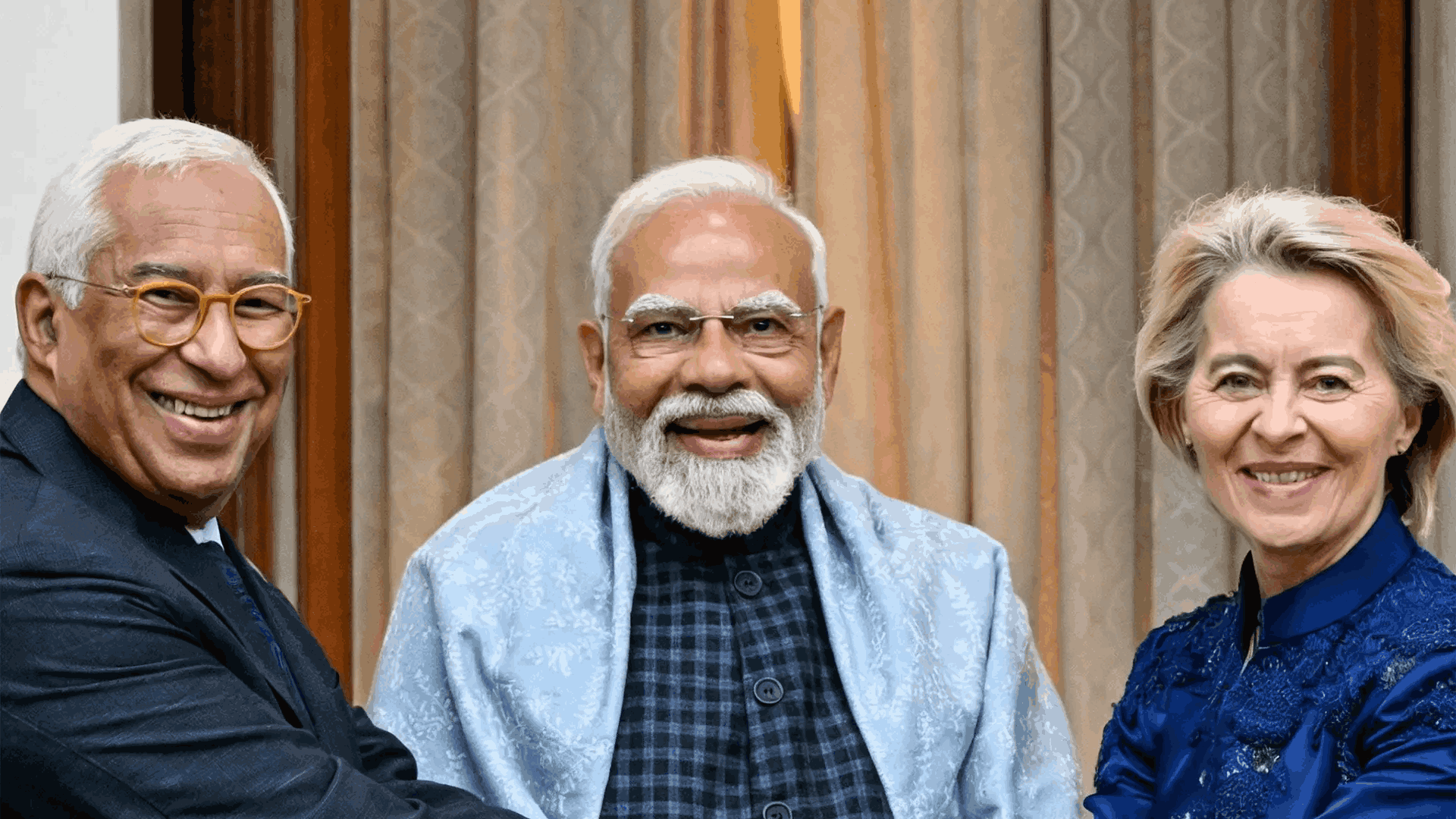
The cuts in tariffs are big and uneven, which shows how varied the economies of the trade partners are. The EU will get rid of tariffs on 91% of tariff lines (by value), while India will get rid of tariffs on 86% of lines (by value). India has given the EU tariff cuts that no other trading partner has obtained, which is a first-mover advantage worth about €4 billion ($4.7 billion) a year. This means that European exporters will have far easier access to markets for cars, machinery, chemicals, drugs, and agricultural goods. Indian taxes on European cars will slowly go down from a harsh 110% to just 10%. Taxes on wine will go down from 150% to 20%, and taxes on olive oil will go down from 45% to nil during the next five years.
The deal gives India important access to markets for labor-intensive products at a time when protectionism is on the rise around the world. The EU’s decision to do rid of tariffs on Indian textiles, leather goods, marine products, gems and jewellery, and shoes might create 6–7 million jobs in the textile industry alone. This is India’s second-largest employer after agriculture. There are over 6,000 European businesses in India and 1,500 Indian businesses in the EU. This agreement strengthens an already strong business connection.
The India-EU deal goes beyond products and includes new rules for professional mobility and services trade. India and the EU traded $78 billion in services in 2024. Indian exports were mostly in IT and business consultancy services, totalling $44 billion. The deal sets up rules for professionals to enter and stay in India temporarily, such as business visitors, intra-corporate transferees, and independent professionals. These rules directly help India’s IT services sector, which is competitive across the world.
The India-US Interim Agreement: Making Deals to Calm Things Down
On February 6, 2026, the India-US framework was revealed. It came out of a totally different situation, one where trade tensions were rising and tariffs were being used as punishment instead of patient discussion. President Donald Trump’s strong use of reciprocal tariffs, including a 50% tax on Indian goods (25% as punishment for buying Russian oil and 25% as a tax on Indian goods), made it very important to find a solution quickly.
The temporary deal gets rid of the extra 25% penalty tax on buying Russian oil and lowers the 25% penalty tariff on Indian items that come from India, such as textiles, leather, shoes, chemicals, and some machinery, to 18%. Tariffs will be completely removed on some items, such as generic drugs, diamonds and stones, and parts for airplanes, as long as the agreement is successfully completed.
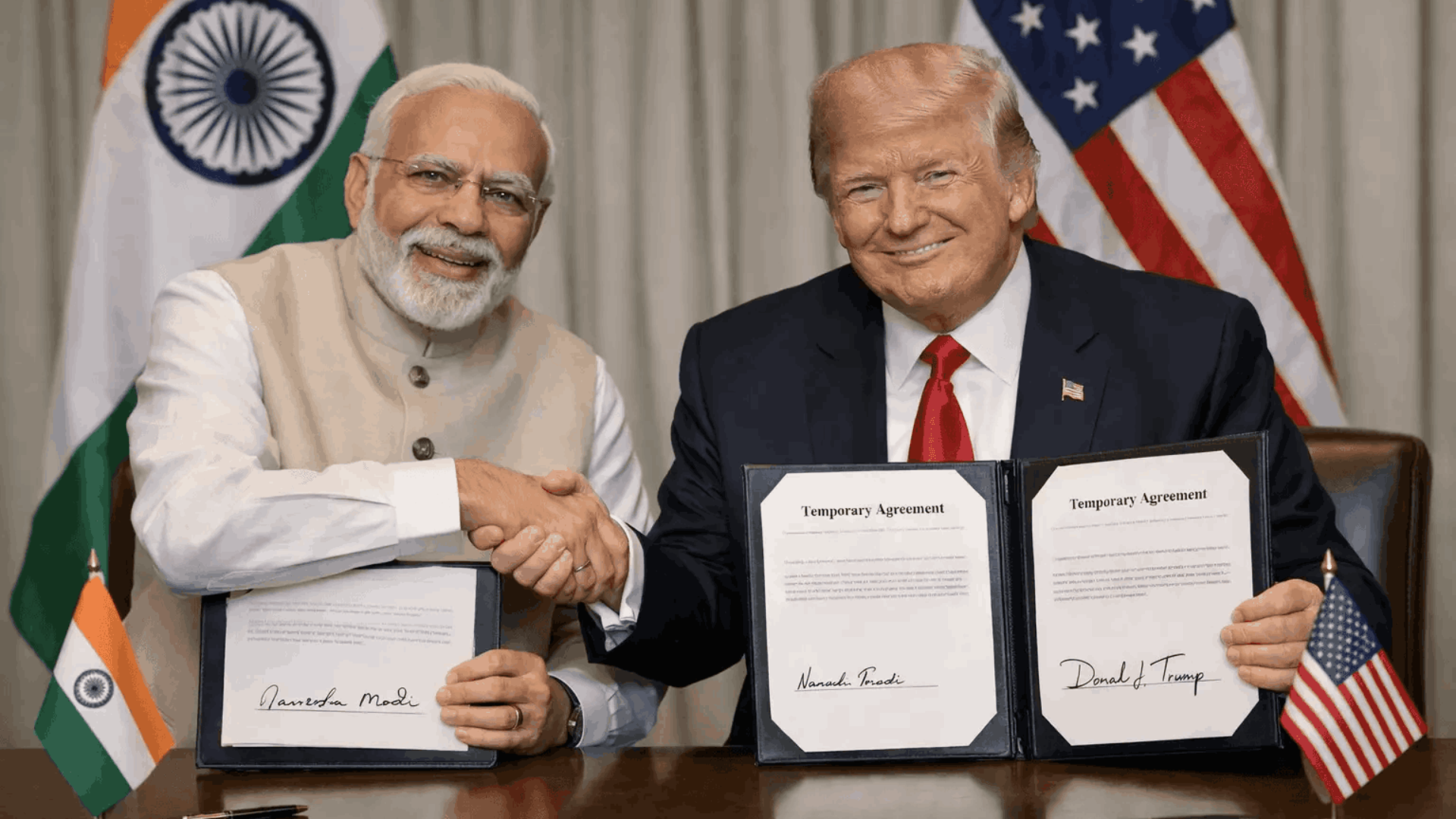
In exchange, India has promised to get rid of or lower duties on all US industrial imports and a lot of agricultural items, including as dry distillers’ grains, red sorghum, tree nuts, fresh and processed fruit, soybean oil, wine, and spirits. India has also promised to buy $500 billion worth of US energy products, aircraft and parts, precious metals, technology items like GPUs, and coking coal over the next five years.
The US-India pact has strategic implications that go beyond just tariff schedules. Both countries have promised to work together to improve economic security alignment, deal with third-party non-market policies (a clear allusion to China), and work together on investment reviews and export controls. The deal also paves the way for strong standards for digital trade and a big rise in trade between the two countries in tech goods that are important for AI and data centre infrastructure.
Strategic Context: Trade in a Time of Geopolitical Rivalry
You can’t understand these accords without knowing what’s going on in the world. The timing of both accords shows how the global trading system is breaking down and how countries are looking for strategic allies in a time of competition between big powers.
The EU accord gives India a different economic anchor at the same time that the US under Trump has taken a transactional and unpredictable approach to trade. The EU is having trouble with Trump’s threats of tariffs and aggressive behavior on Greenland, but it has discovered a democratic partner in India that shares its views on trade based on norms. India is now the EU’s ninth-largest commercial partner, making up 2.4% of all EU commerce. This is small compared to the US (17.3%) and China (14.6%), but it has a lot more room to develop.
The United States’ temporary deal with India is an effort to reduce India’s dependence on Russian energy while also giving American farmers and manufacturers a chance to sell their goods to India, where tariffs on some agricultural goods can be as high as 37%. The pact also helps the US’s strategic goals in the Indo-Pacific by developing ties with a country that can balance China’s power.
Effects on the economy and what they mean for the future
The effects on the economy are considerable. The EU accord is likely to protect 800,000 jobs in Europe at first, and it is projected to create a lot of jobs in India’s labor-intensive manufacturing sectors. India now has preferential access to markets that make up most of the world’s GDP, thanks to earlier free trade deals with the UAE, Australia, and the UK.
These agreements give Indian businesses, especially those in textiles, pharmaceuticals, IT services, and gems and jewellery, important market access and certainty in a world that is still quite uncertain. India’s market of 1.4 billion people, which currently has much fewer tariff barriers, is one of the remaining big frontier markets for European and American corporations to grow.
But there are still problems to solve. The deal between India and the US is just temporary, and negotiations for a full Bilateral Trade Agreement are still going on. The politically sensitive subject of opening India’s agricultural market, as well as implementation deadlines and rules of origin, would need to be handled with caution. The interim framework talks about India’s purchases of Russian oil, but this issue could still cause problems.
Final Thoughts
The trade treaties between India and the EU and between India and the US are turning points for India’s economy and for the growth of commerce around the world. They show that India is becoming a big economy that both Western democracies are actively trying to connect with, particularly as companies explore India market entry strategies and expand their international footprint.. They show that strategic collaborations can create big economic opportunities, especially in a time when protectionism is on the rise. They also show that the future of trade doesn’t rest in big, complicated multilateral agreements, but in well planned bilateral agreements that help both businesses and the economy.
As these deals are put into action over the next several years, they will change how goods and services are delivered, provide new ways for investment and technology to flow, and strengthen political and security ties between India and its main Western allies. For global firms evaluating business setup in India or seeking guidance from experienced business consultants in India, these partnerships show that India has successfully navigated its way to a place of strategic independence and greater wealth in a world where geopolitical competition and economic fragmentation are growing.
FAQs
- What do the India–EU and India–US trade agreements mean for foreign businesses?
These agreements reduce tariffs, simplify market access, and create predictable regulatory frameworks. For foreign companies, this lowers entry risk and improves long-term profitability when entering India’s growing consumer and industrial markets.
- How can a foreign company benefit from these trade deals when entering India?
Businesses can benefit through reduced import duties, easier professional mobility, improved technology transfer rules, and expanded access to Indian supply chains. Companies that establish operations early can gain first-mover advantages in pricing and distribution.
- Which industries will gain the most from the new trade agreements?
Sectors expected to benefit most include:
- Textiles and apparel
- Pharmaceuticals and generics
- IT and business services
- Automotive and machinery
- Gems and jewellery
- Agri-commodities and processed foods
These sectors align with tariff reductions and expanded export access.
- Is this the right time for companies to consider India market entry?
Yes. Trade liberalization combined with geopolitical realignment makes this a strategic window. Firms entering now can position themselves before regulatory frameworks mature and competition intensifies.
- What challenges should businesses prepare for before expanding into India?
Key challenges include:
- Regulatory compliance complexity
- Local taxation structures
- State-level policy variations
- Supply chain localization requirements
- Licensing and approvals
Proper advisory support reduces these risks significantly.
- What is the process for business setup in India for foreign investors?
Typically, the process involves:
- Choosing an entity structure
- Obtaining regulatory approvals
- Registering with tax authorities
- Opening banking channels
- Securing operational licenses
The exact steps vary based on sector and ownership structure.
- Why do companies hire business consultants in India before expansion?
Local consultants help with regulatory navigation, partner identification, compliance, and market positioning. This minimizes costly delays, prevents legal errors, and accelerates time-to-market.
- Will these trade agreements affect supply chain strategies?
Yes. Reduced tariffs and improved logistics cooperation will encourage companies to diversify supply chains toward India as an alternative manufacturing and sourcing hub.
- How will these deals impact cross-border investment flows?
They are expected to increase bilateral investment by providing stronger legal protections, clearer dispute resolution frameworks, and greater confidence for institutional investors.
- What long-term strategic advantage does India offer global companies?
India combines scale, demographic growth, technological capability, and expanding trade access. Few markets offer all four simultaneously, making it a rare long-term growth platform rather than just a short-term opportunity.
- Who can help with end-to-end market entry and compliance in India?
Companies planning expansion often work with specialized advisory firms that provide entity setup, regulatory guidance, tax structuring, and operational support to ensure a compliant and efficient market launch.